Contents
- 1 INTRODUCTION
- 2 Understanding Chennai’s Wedding Venue Landscape is to know before finalise wedding hall in chennai
- 2.1 Location and Accessibility: The Foundation of Guest Experience
- 2.2 Capacity Planning: Finding Your Perfect Fit
- 2.3 Budget Considerations: Beyond the Base Price
- 2.4 Date Availability and Booking Timeline
- 2.5 In-House Catering vs. External Caterers
- 2.6 Technical Infrastructure and Amenities
- 2.7 Restroom Facilities: An Often Overlooked Essential
- 2.8 Decoration Flexibility and Restrictions
- 2.9 Kitchen and Service Infrastructure
- 2.10 Photography and Videography Considerations
- 2.11 Weather and Climate Control Considerations
- 2.12 Vendor Coordination and Management
- 2.13 Legal and Licensing Requirements
- 2.14 Accommodation and Guest Convenience
- 2.15 Cultural and Religious Sensitivity
- 2.16 Post-Wedding Considerations
- 2.17 Red Flags to Watch Out For
- 2.18 Creating Your Venue Evaluation Checklist
- 2.19 Making the Final Decision
- 3 Conclusion: Your Perfect Venue Awaits
INTRODUCTION
Planning a wedding in Chennai is an exciting journey filled with tradition, celebration, and countless decisions. Among all the choices you’ll make, selecting the perfect wedding hall stands as one of the most crucial and to know before finalise wedding hall in chennai. The venue sets the tone for your entire celebration and can significantly impact your budget, guest experience, and cherished memories. Whether you’re planning an intimate gathering or a grand celebration, this comprehensive guide will walk you through everything you need to know before signing that contract.
Understanding Chennai’s Wedding Venue Landscape is to know before finalise wedding hall in chennai
Chennai offers a diverse range of wedding venues, from traditional kalyana mandapams steeped in South Indian heritage to contemporary banquet halls with modern amenities, luxurious star hotels, charming beach resorts, and elegant heritage properties. Each type of venue brings its own character and considerations to your special day.
The city’s wedding season typically peaks between November and February when the weather is most pleasant. During these months, popular venues book up quickly, sometimes a year or more in advance. Understanding this landscape helps you plan your venue search strategically and set realistic expectations for availability and pricing .Sometimes,we have to know before finalise wedding hall in chennai.
Location and Accessibility: The Foundation of Guest Experience
The location of your wedding hall can make or break your guests’ experience. Consider the geographical distribution of your guest list. If most attendees are coming from specific neighborhoods like T. Nagar, Adyar, or Anna Nagar, choosing a centrally accessible venue will minimize travel time and ensure better attendance.
Proximity to transportation hubs matters significantly, especially for out-of-town guests. Venues near the airport, railway stations, or major bus terminals offer convenience for those traveling from other cities. Additionally, check the availability of local transportation options like auto-rickshaws, app-based cabs, and public buses in the area.
Parking is a critical yet often overlooked aspect. Chennai’s traffic congestion is legendary, and inadequate parking can frustrate guests before they even enter your celebration. Ensure the venue offers sufficient parking space for the expected number of vehicles. For larger weddings, inquire about valet parking services or nearby overflow parking areas. Some venues partner with neighboring establishments to provide additional parking during peak events.
The neighborhood’s character also deserves consideration. Is it a quiet residential area where noise restrictions might apply, or a commercial zone more accommodating to late-night celebrations? Check local regulations regarding event timings and sound levels to avoid unexpected disruptions.The couples covering everything now-a-days and need to know before finalise wedding hall in chennai.
Capacity Planning: Finding Your Perfect Fit
Determining the right capacity requires more than a simple headcount. Wedding attendance can be unpredictable, with some invited guests unable to attend while others bring unexpected plus-ones. A good rule of thumb is to book a venue that comfortably accommodates 80-90% of your invited guest list, allowing for natural fluctuation.
Consider the different functions you’ll be hosting. A venue perfect for your 500-person reception might feel empty during a 100-person mehendi ceremony. Ask about flexible space options that can be adjusted for different event sizes. Some halls offer partitions or multiple rooms that can be opened or closed based on attendance.
Pay attention to how the space is utilized. A hall with a 500-person capacity might seem adequate on paper, but if the stage, dining area, and seating arrangements are poorly planned, it can feel cramped. Request a detailed floor plan and visualize how different elements like the mandap, buffet counters, dance floor, and seating will be arranged.Find your perfect fit is to know before finalise wedding hall in chennai.
Outdoor spaces add another dimension to capacity planning. If the venue includes a lawn or terrace, understand how weather contingencies work. Does the outdoor capacity count toward the total, or is it additional? What backup arrangements exist if weather forces everyone indoors?
Budget Considerations: Beyond the Base Price
The quoted hall rental is just the beginning of your venue-related expenses. Most Chennai wedding halls operate on different pricing models, some charging a flat rental fee while others work on a per-plate basis for catering. Understanding these structures helps you compare venues accurately and avoid budget surprises.
Peak season pricing can increase costs by 20-40% compared to off-season rates. Weekends, especially Saturdays, command premium pricing. If your wedding date is flexible, consider weekday celebrations or off-season months for significant savings. Some venues offer attractive packages during slower periods.
Hidden costs often emerge in the fine print. Ask about electricity charges, generator backup costs, air conditioning fees, and overtime charges. Some venues charge separately for basic amenities like chairs, tables, and linens. Service charges and taxes can add 18-25% to your total bill, so always request an all-inclusive quote with detailed breakdowns.
Advance payment terms vary widely. Some venues require 50% upfront with the balance due weeks before the event, while others ask for the full amount months in advance. Understand the refund and cancellation policy thoroughly. Given the uncertainties of life, knowing what happens if you need to postpone or cancel is essential, even if you never anticipate using this clause.
Security deposits are standard practice, typically refunded within 15-30 days after the event if no damages occur. Clarify what constitutes damage and how this determination is made. Take photographs of the venue condition before your setup begins to protect yourself against unjustified deduction.Budget consideration is major part to know before finalise wedding hall in Chennai.
Date Availability and Booking Timeline
Popular Chennai wedding venues often have waiting lists during auspicious dates according to Hindu calendars. Dates determined by astrological considerations see particularly high demand. If your wedding date is fixed based on such considerations, begin your venue search immediately, ideally 12-18 months before the date.
Some venues offer provisional bookings where you can hold a date for a limited period with a smaller advance payment. This option provides flexibility if you’re coordinating multiple vendors or awaiting family decisions. However, understand the terms clearly, these provisional holds typically last only 7-15 days.Booking timeline is one of precaution to know before finalise wedding hall in chennai.
Be prepared with backup dates when approaching venues. Even with advance planning, your first-choice date at your dream venue might be unavailable. Having two or three alternative dates, preferably in the same month, increases your chances of securing your preferred location.
Consider the auspicious time or muhurtham for your ceremony. Some venues are more accommodating than others about early morning or afternoon muhurtham timings. Confirm whether the venue allows access for decorators and caterers the night before for morning ceremonies, and whether this incurs additional charges.
In-House Catering vs. External Caterers
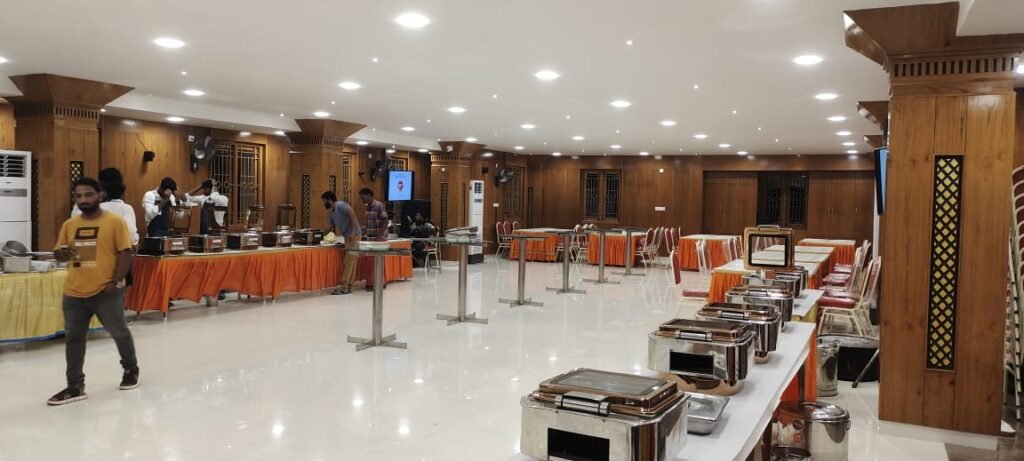
Chennai wedding halls typically fall into two categories regarding food service. Some insist on their in-house catering with no exceptions, while others allow external caterers, sometimes with restrictions or additional fees.
In-house catering offers convenience and single-point accountability. The venue manages coordination, understands kitchen capabilities, and handles service staff. However, you sacrifice flexibility in menu customization and might pay premium prices. Request multiple tastings before committing, and ensure they can accommodate specific regional cuisines, dietary restrictions, and special requests.
Our customer’s said that Raj wedding venue is a great place for weddings ,parties and many other functions..the dinning arrangements ,kitchen are accommodated all our guests feel very comfortable and hygenic. If the venue allows external caterers, verify any restrictions or requirements. Some halls charge a “corking fee” or external caterer fee, which can range from Rs. 50 to Rs. 200 per plate. Others restrict caterers to a pre-approved list, limiting your choices. Understand the kitchen facilities available to external caterers, multiple cooking stations, adequate refrigeration, proper ventilation, and sufficient prep space are essential for smooth service.
Food safety and hygiene standards should be non-negotiable. Check if the venue or caterer holds relevant health licenses and follows proper food handling protocols. Given Chennai’s climate, proper food storage and temperature control are critical to prevent spoilage.
The quantity and quality of service staff significantly impacts guest experience. For a 300-person wedding, expect at least 15-20 service staff for efficient buffet management and table service. Clarify who provides service staff, the venue or caterer, and whether their wages are included in your package or charged separately.
Technical Infrastructure and Amenities
Modern weddings require robust technical support. Adequate electrical capacity is fundamental, especially if you’re planning elaborate lighting, sound systems, LED screens, and air conditioning. Power outages are not uncommon in Chennai, so generator backup is essential. Confirm the generator capacity and whether its operation incurs additional fuel charges.
Air conditioning quality varies dramatically between venues are technical infrastructure and amenties to know before finalise wedding hall in chennai. Some older halls have inadequate or noisy AC systems that struggle during peak summer months. Visit the venue during a similar time of day and season as your wedding to assess comfort levels. Central air conditioning generally performs better than window units or split systems.Raj wedding hall
Sound systems and acoustics matter for ceremony clarity and entertainment enjoyment. Check if the venue provides a sound system or if you need to arrange it externally. Poor acoustics can ruin speeches and ceremonies, while excessive sound can disturb neighbors. Ask about any sound level restrictions and what time music must end.
Lighting dramatically affects ambiance and photography. Venues with high ceilings and proper lighting infrastructure allow for more creative designs. Check if the venue permits external lighting designers and whether existing electrical points accommodate your vision. Dim venues require additional lighting rentals, impacting your budget.
Internet connectivity might seem trivial but proves valuable for various purposes including live streaming for distant relatives, digital guest management, and social media sharing. Verify WiFi availability and bandwidth, especially if many guests will be connecting simultaneously.
Restroom Facilities: An Often Overlooked Essential
Guest comfort depends significantly on clean, well-maintained, and sufficient restroom facilities. A venue hosting 300 guests should ideally have at least 6-8 restroom stalls. Long queues at washrooms create negative experiences that guests remember.
Assess the restrooms personally during your venue visit. Check cleanliness, ventilation, water pressure, and whether Western and Indian-style toilets are available. Many guests, especially elderly attendees and children, have specific preferences and limitations.
Amenities like running water, hand dryers or paper towels, liquid soap, and mirrors should be standard. Designated attendants to maintain restrooms throughout the event ensure consistently clean facilities. Some venues charge extra for restroom attendants, so clarify this beforehand.
Special considerations include accessibility for differently-abled guests and baby changing facilities for families with infants. These thoughtful touches elevate the guest experience and demonstrate inclusive planning.
Decoration Flexibility and Restrictions
Every couple dreams of personalizing their wedding venue to reflect their unique style. However, venues impose varying levels of restrictions on decorations. Some traditional kalyana mandapams prohibit modifications to their existing décor elements, while contemporary banquet halls offer blank canvas flexibility.
Understand what’s included in the venue’s standard decoration package and what requires additional payment. Some venues include basic stage decoration, entrance arches, and flower arrangements in their rental fee. Others charge separately for every decorative element or mandate that you use their in-house decorators.Now a days people has a customised decorative ideas in their mind is also a thing to know before finalise wedding hall in chennai.
If bringing external decorators, verify whether the venue charges vendor fees and what restrictions apply. Common restrictions include prohibitions on nails, adhesives that damage walls, hanging items from ceilings without specific attachment points, and open flames beyond a certain number.
Setup and breakdown timings significantly impact decorator costs. Limited access time means decorators must work longer hours or bring larger teams, increasing expenses. Confirm exactly when decorators can enter for setup and when breakdown must be complete. Some venues allow overnight setup access, while others restrict entry to a few hours before the event.
Theme implementation capabilities vary by venue. High ceilings accommodate dramatic draping and chandeliers, while low ceilings limit vertical design possibilities. Column spacing affects draping patterns and spatial division. Request architectural drawings or at least ceiling height and column placement details for your decorator.
Kitchen and Service Infrastructure
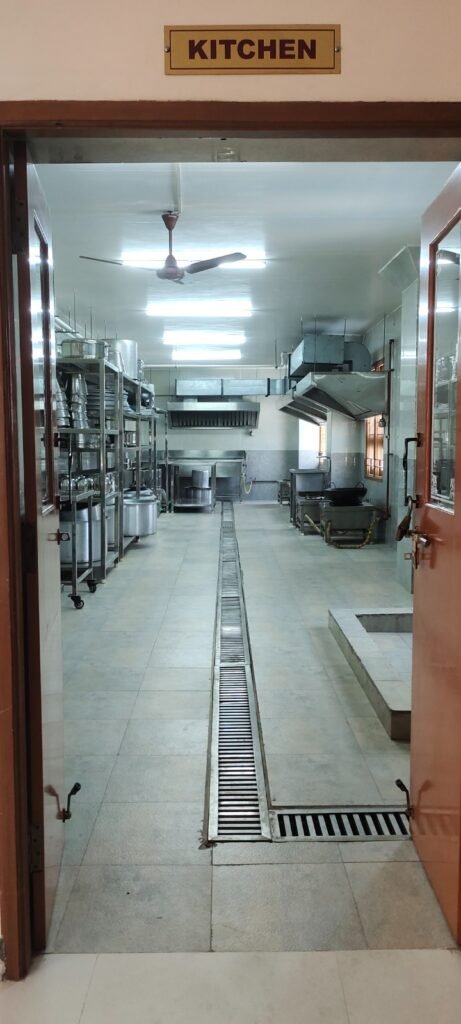
It is kitchen infrastructure of raj wedding hall.we maintain our kitchen hygenic and clean after every section.Behind every memorable wedding feast stands a well-equipped commercial kitchen. Even if you’re using external caterers, the venue’s kitchen facilities determine food quality and service efficiency. Visit the kitchen area personally during your venue tour. Look for adequate cooking stations, modern equipment, proper ventilation, organized storage, and hygiene standards.
Refrigeration capacity matters particularly for events spanning multiple functions. Your caterer needs proper cold storage for raw ingredients, prepared items, and desserts. Inadequate refrigeration in Chennai’s heat can lead to food spoilage and serious health risks.
Service entrance location and accessibility affect logistics. A separate service entrance allows vendors, caterers, and decorators to move materials without disturbing guests. Check if service vehicles can park near the kitchen for efficient loading and unloading. Multi-story venues should have service elevators with adequate capacity for large catering equipment and decoration materials.
Waste management and disposal facilities reflect a venue’s operational maturity. Proper trash segregation, adequate disposal areas, and pest control measures prevent unpleasant situations during your event. Venue cleanliness standards directly correlate with overall management quality.
Photography and Videography Considerations
Wedding photography and videography capture memories that last generations. Venue characteristics significantly impact the quality of these visual records. Natural lighting is a photographer’s best friend. Venues with large windows, skylights, or outdoor spaces offer better lighting conditions, particularly for day events. Artificially lit venues require additional photography equipment and expertise.
Indoor ceiling height and space affect photography compositions. Low ceilings and cramped spaces limit creative angles and full-length shots. High ceilings allow for dramatic overhead shots and better use of lighting equipment.
Background aesthetics matter for photographs. Cluttered or dated décor becomes a permanent part of your wedding photographs. Some venues feature beautiful architectural elements like arches, columns, or traditional designs that enhance photos, while others require significant decoration to look presentable.
Inquire about photography and videography restrictions. Some venues prohibit tripods in certain areas, restrict flash photography during ceremonies, or limit drone usage. If you’re planning cinematic aerial shots, confirm drone permissions and any safety regulations.
Designated photography zones create opportunities for well-planned couple portraits and family photos. Look for photogenic backdrops within the venue, decorative entrances, landscaped gardens, architectural features, or dedicated photography corners. Discussing these spaces with your photographer during venue selection ensures alignment with your visual expectations.
Weather and Climate Control Considerations
Chennai’s climate presents specific challenges for wedding planners. Scorching summer heat from March to July requires robust air conditioning. Even during the pleasant winter wedding season from November to February, indoor comfort control remains important for guest satisfaction.
For venues with outdoor components such as lawns, terraces, or courtyards, weather contingency planning is essential. Sudden rain, even during typically dry months, can disrupt outdoor ceremonies. Verify backup arrangements and whether transitioning indoors incurs additional charges or capacity limitations.
Tenting or shamiana arrangements for outdoor areas offer weather protection but require specific infrastructure. Check if the venue has designated anchor points for tent installation and whether they permit or provide tent services. Tented areas need adequate ventilation and possibly additional cooling through fans or air coolers.
Monsoon season weddings from October to December carry higher weather-related risks. If your wedding falls during this period, ensure concrete backup plans exist and that you’re comfortable with potential last-minute adjustments. Some venues handle weather transitions smoothly with practiced efficiency, while others lack experience with contingency execution.some wedding halls like Raj wedding hall,Leela palace and Green coconut resort are well in weather and climate control considerations are also some of the things we have to know before finalise of wedding hall in chennai.
Vendor Coordination and Management
Your wedding involves numerous vendors such as decorators, caterers, photographers, makeup artists, DJ or musicians, and potentially more. How well the venue coordinates with these professionals affects your planning stress levels and event day smoothness.
Some venues provide dedicated event coordinators who serve as your single point of contact and manage vendor coordination. This service proves invaluable, especially for couples planning from abroad or managing demanding work schedules. Clarify whether coordination services are complimentary or require additional fees.
Vendor loading and unloading areas, storage spaces, and preparation rooms affect efficiency. Decorators need space to store materials, caterers require prep areas, and makeup artists need rooms with proper lighting and mirrors. Confirm availability of these support spaces and whether multiple vendors can work simultaneously without conflicts.
Green room facilities for the wedding couple and immediate family provide privacy for outfit changes, rest, and final preparations. Check the number, size, and amenities of these rooms. Air conditioning, attached bathrooms, full-length mirrors, and adequate seating should be standard features.
Some venues maintain strict approved vendor lists and charge fees for external vendors. These restrictions might conflict with your desire to work with specific professionals you trust. Understand these policies upfront and negotiate if necessary. Sometimes vendors not on the approved list can be added after safety or insurance verification.
Legal and Licensing Requirements
Operating a wedding venue in Chennai requires various licenses and permissions. While these are primarily the venue’s responsibility, verifying compliance protects you from potential disruptions. Confirm that the venue holds valid licenses for operating a commercial establishment, serving food if providing catering, playing music and entertainment, and adequate fire safety certifications.
Noise pollution regulations in Chennai restrict sound levels and timing, particularly in residential areas. Venues should be aware of applicable decibel limits and time restrictions for music and celebrations. Violations can result in police intervention and event shutdown, a disaster no couple wants to experience.
Fire safety becomes critically important when hosting large gatherings. Check for clearly marked emergency exits, functional fire extinguishers, smoke detectors, and clearly displayed evacuation plans. During peak wedding season, venues host back-to-back events, so safety equipment must be regularly maintained and functional.
Insurance coverage protects against unforeseen circumstances. Some venues carry liability insurance covering guest injuries or property damage during events. Understanding insurance responsibilities, both the venue’s and your potential needs, provides peace of mind. Consider personal event insurance if you’re concerned about cancellation due to emergencies or vendor no-shows.
Accommodation and Guest Convenience
For multi-day celebrations or when hosting numerous out-of-town guests, on-site or nearby accommodation becomes important. Hotel venues naturally offer accommodation packages, often at discounted rates for wedding guests. Standalone halls should be evaluated based on proximity to quality hotels across various budget ranges.
Compile a list of hotels within 5 kilometers of your venue, noting their categories, approximate rates, and capacities. Blocking rooms at multiple price points ensures all guests find suitable accommodation. Many hotels offer group booking discounts or complimentary upgrades for wedding blocks.
Transportation between accommodation and venue for multiple functions requires planning. Some venues provide shuttle services, while others expect couples to arrange transportation. For elderly guests and those unfamiliar with Chennai, organized transportation significantly improves their experience and ensures timely arrival.
Destination convenience extends beyond accommodation. Nearby access to medical facilities, pharmacies, ATMs, and convenience stores matters, especially for multi-day celebrations. Guests might need these services, and their availability reflects overall location suitability.
Cultural and Religious Sensitivity
Chennai’s cultural diversity means weddings blend various traditions, rituals, and customs. Your chosen venue should accommodate your specific religious and cultural requirements without resistance or excessive charges.
For Hindu weddings, proper space for the mandap, homam kund fire arrangement, and adequate clearance for pradakshina are essential. Traditional ceremonies require specific spatial configurations that some modern banquet halls cannot accommodate without modifications.
Muslim weddings might need gender-segregated spaces for walima arrangements. Christian ceremonies require altar space, seating configurations for church-style arrangements, and sometimes provisions for religious symbols and décor.
Inter-cultural weddings combining different traditions need venues flexible enough to host varied ceremonies. A venue experienced in diverse celebrations will offer solutions and suggestions that save you considerable planning time.
Vegetarian-only kitchens matter to many traditional families. If your family follows strict vegetarian practices, confirm whether the venue’s kitchen has ever prepared non-vegetarian food or if they maintain separate vegetarian facilities. Some families consider this non-negotiable for religious reasons.
Post-Wedding Considerations
The wedding doesn’t end when the last guest leaves. Post-event responsibilities and venue policies affect your experience and final costs. Clarify cleanup responsibilities and what constitutes normal wear versus chargeable damage. Some venues handle all post-event cleanup as part of their service, while others expect your vendors to leave the space in original condition.
Forgotten items are inevitable at large gatherings. Establish the venue’s lost and found policy and how long they retain items. Providing contact information ensures they can reach you if valuable items are discovered after your departure.
Final payment timing and security deposit refund timelines vary between venues. Some venues assess damage claims and process refunds within 7 days, while others take 30 days or more. Understanding these timelines helps you plan your finances, especially if you’ve borrowed funds or used credit facilities for the wedding.
Follow-up support for issues that emerge post-event, perhaps related to vendor payments, disputed charges, or required documentation, reflects venue professionalism. Established venues with good reputations generally handle post-event matters responsibly, while less reputable operators might become difficult to contact after receiving full payment.
Red Flags to Watch Out For
Certain warning signs during venue selection should prompt caution or reconsideration. Be wary if venues are reluctant to show you actual events in progress, insist on receiving cash payments without proper receipts, have consistently negative online reviews despite claims of popularity, or cannot provide references from recent clients.
Pressure tactics suggesting artificial urgency like claiming other parties are about to book your date should raise concerns. While popular venues do book quickly, professional operators provide information and allow you time to decide rather than forcing immediate commitment.
Vague or constantly changing quotations indicate poor organization or potential dishonesty. Request detailed, itemized quotations in writing. Verbal promises not reflected in written agreements are essentially meaningless if disputes arise.
Poor maintenance visible during your visit such as stained upholstery, non-functional restrooms, or broken fixtures suggests overall management quality issues. If the venue cannot maintain its property well during customer visits, event day standards will likely disappoint.
Creating Your Venue Evaluation Checklist
Systematically evaluating multiple venues requires an organized approach. Create a comprehensive checklist covering all categories discussed in this guide. Assign importance ratings to different factors based on your priorities. What matters most to one couple might be less important to another.
Visit venues at different times if possible. A venue that looks beautiful during a quiet afternoon weekday might feel completely different during a busy Saturday evening. If permitted, observe an actual event to see staff handling, crowd management, and service quality in real conditions.
Bring key decision-makers to venue visits. If parents or family elders have strong opinions, their presence during venue tours prevents later disagreements or decision reversals. Trying to describe venue characteristics secondhand often leads to miscommunication and regrets.
Document your visits with photographs and videos. After visiting five or six venues, details blur together. Visual documentation helps refresh your memory during comparison and decision-making stages. Take photos of rooms, facilities, sample setups, and any areas of concern.
Making the Final Decision
After thorough research, visits, and discussions, trust your instincts alongside practical considerations. The venue that checks all boxes but feels wrong probably isn’t your best choice. Your intuition about spaces and people managing them carries weight.Raj wedding hall is spacious,have dedicated bridal and groom pre-wedding preparations, specalised north indian,south indian and continental cuisines catering team,parking space for over 400 vehicles and many other services is to know before finalise wedding hall in chennai.
Balance emotional appeal with practical realities. That stunning heritage property might steal your heart but strain your budget or inconvenience guests. Finding harmony between what you want and what works practically leads to the most satisfying decision.
Before signing contracts, have a legal expert review terms, especially cancellation policies, refund conditions, and liability clauses. Most venue contracts favor the venue heavily, but egregiously one-sided terms can sometimes be negotiated or should prompt you to reconsider altogether.
Maintain open communication with your chosen venue throughout the planning period. Regular check-ins ensure everyone stays aligned on expectations, timelines, and deliverables. Changes to your plans should be communicated promptly and confirmed in writing through email or amended contracts.
Conclusion: Your Perfect Venue Awaits
Selecting the perfect wedding hall in Chennai requires patience, thorough research, and careful consideration of numerous factors. While the process can feel overwhelming, breaking it down into manageable components as outlined in this guide makes the journey smoother and less stressful.
Remember that no venue will be absolutely perfect in every aspect. Prioritize what matters most to you and your partner, whether that’s location convenience, budget optimization, aesthetic appeal, cultural accommodation, or guest comfort. Compromise on less important factors while staying firm on your non-negotiables.
Your wedding venue becomes the canvas upon which your love story is celebrated. The right hall doesn’t just provide physical space but enhances every moment, from the nervous excitement before the ceremony to the joyful celebrations with loved ones. The memories created within those walls will be cherished for generations, making this one of the most important decisions in your wedding planning journey.
Chennai offers an incredible array of wedding venues, each with unique strengths and characteristics. With the knowledge and preparation this guide provides, you’re well-equipped to find the perfect setting for your special day. Trust the process, ask questions, and don’t settle until you find the venue that feels just right. Your perfect wedding hall in Chennai is out there, waiting to become the backdrop for one of life’s most beautiful celebrations.
Raj wedding hall position itself as premium segment and as well best wedding hall in chennai.Raj wedding hall has location accessibility,capacity planning,budget consideration,In house catering vs external caterers,technical infrastructure and amenties,Restroom facilities,decoration flexibility and restrictions are some things to know before finalise wedding hall in chennai.
FOR MORE QUERIES ABOUT RAJ WEDDING HALL CONTACT US HERE.