Transform Your Chennai Wedding with Strategic Guest Seating That Maximizes Comfort, Flow, and Celebration
Introduction
Planning a wedding in Chennai means juggling vibrant traditions, diverse guest lists, and the unique logistics of the city’s celebrated wedding halls. From intimate gatherings in Nungambakkam to grand celebrations in venues across T. Nagar and Anna Nagar, one element often determines whether your event flows smoothly or feels cramped and chaotic: your seating arrangement. The best seating arrangements do more than fill a room—they shape how guests interact, how ceremonies progress, and how memories are captured in every photograph.
Chennai’s wedding culture brings together extended families, professional colleagues, and community members, often numbering in the hundreds. The tropical climate, with its monsoon considerations and air conditioning requirements, adds another layer of complexity to layout planning. Whether you’re hosting a traditional South Indian ceremony with specific ritual viewing needs or a fusion reception that encourages mingling, choosing from the best seating arrangements becomes crucial to your event’s success.
This comprehensive guide walks you through ten proven seating layouts that work exceptionally well in Chennai wedding halls. Each arrangement addresses the practical realities of local venues—from column placements and stage positions to traffic flow during multi-course meals and cultural expectations around family seating. We’ll examine how these layouts perform under real Chennai conditions, including space constraints, guest capacity variations, and the coordination challenges unique to our city’s vendor ecosystem. By understanding these options, you’ll make an informed decision that enhances every aspect of your celebration while respecting the traditions and comfort your guests expect.
Quick Summary: 10 Best Seating Arrangements at a Glance
Here’s your quick reference to the layouts covered in this guide:
- Theater Style – Rows facing forward, ideal for ceremony focus
- Banquet Rounds – Circular tables for 8-10 guests, perfect for dinner receptions
- U-Shape Configuration – Open-ended setup for intimate gatherings with speaker visibility
- Hollow Square – Tables forming a square perimeter, suited for family-focused events
- Herringbone Style – Angled rows improving sightlines without sacrificing capacity
- Cocktail/Standing Clusters – High tables and standing areas for modern minglers
- Serpentine Layout – Curved, flowing table arrangements for artistic elegance
- Mixed Cabaret – Combination of different table sizes for flexible group seating
- Imperial/Long Tables – Extended parallel tables creating a banquet hall atmosphere
- Classroom Configuration – Tables with chairs on one side, useful for interactive ceremonies
Each layout offers distinct advantages for Chennai wedding halls, and we’ll help you identify which fits your vision, guest count, and venue dimensions.
1. Theater Style Seating
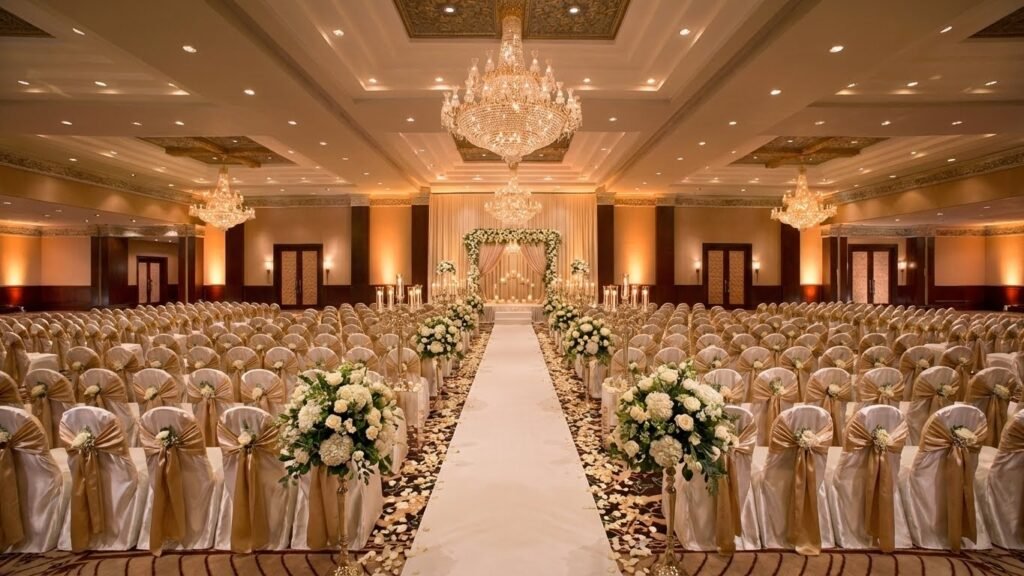
Theater style arranges chairs in straight rows facing a central stage or mandap, similar to an auditorium setup. This classic configuration maximizes guest capacity while keeping everyone’s attention directed toward the ceremony proceedings. This is one of the best seating arrangements.
Pros:
- Accommodates the highest number of guests per square foot, crucial for Chennai’s popular high-capacity halls
- Clear sightlines to the mandap or stage for traditional ceremonies
- Simple setup requiring minimal furniture beyond chairs
- Cost-effective since it eliminates table rental expenses
- Natural aisle creation for bride’s entrance and ritual processions
Cons:
- No dining surface for guests during ceremonies with food service
- Limited guest interaction as everyone faces forward
- Can feel formal and rigid for reception portions
- Challenging for elderly guests who need table support
Practical Tips for Chennai Implementation:
Create a center aisle at least 4 feet wide to accommodate traditional entry processions with musicians and family members. Position the first row 8-10 feet from the stage to allow photography space and ritual movement. Consider reserving front sections for immediate family with visible markers or different chair decorations. Account for air conditioning flow—avoid blocking vents with tall floral arrangements at aisle ends. For halls in areas like Alwarpet or Mylapore, where outdoor-indoor transitions are common, position theater seating at least 6 feet from open doorways to manage heat and noise.
Guest Capacity:
Works best for 200-800 guests depending on hall size; the best seating arrangements for pure ceremonies often include theater style when maximizing attendance is the priority.
2. Banquet Rounds
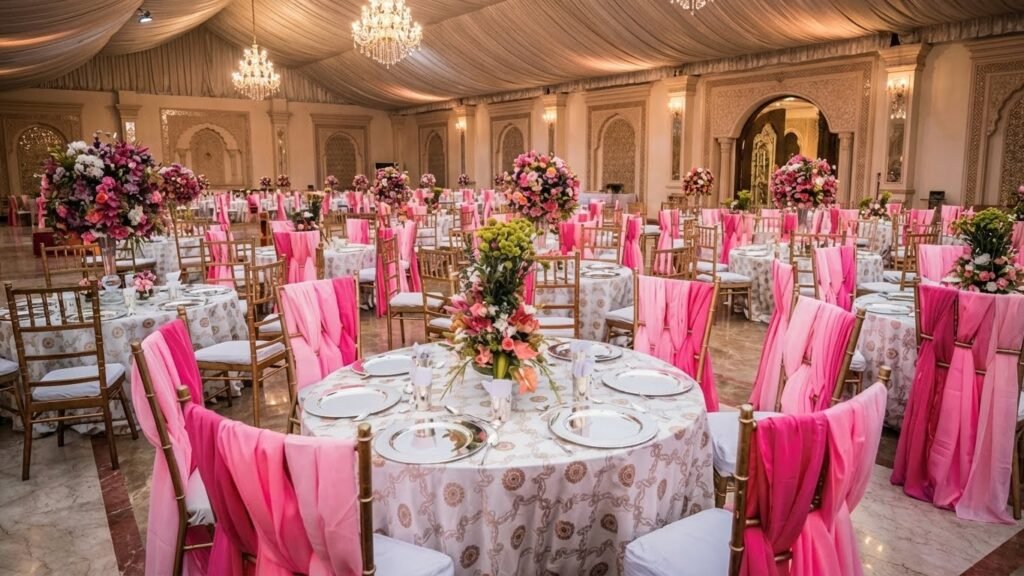
Banquet rounds feature circular tables, typically seating 8-10 guests each, distributed throughout the hall. This layout dominates Chennai wedding receptions because it balances dining functionality with social interaction.
Pros:
- Encourages conversation among tablemates, mixing family groups and friend circles
- Provides stable dining surfaces for multi-course South Indian meals
- Allows centerpiece displays that enhance décor themes
- Flexible spacing adjustments to accommodate varying hall shapes
- Proven to work in most Chennai venues from compact halls to expansive ballrooms
Cons:
- Reduces total guest capacity compared to theater seating
- Requires more floor space and careful planning to avoid crowding
- Some seats have obstructed stage views depending on table position
- Higher rental costs for tables, linens, and centerpieces
Practical Tips for Chennai Implementation:
Space tables 5-6 feet apart to allow smooth service flow for catering staff carrying large trays. For halls with central pillars (common in heritage venues around Egmore), position tables to make pillars feel intentional rather than obstructive—use them as natural dividers between family sections. Select 60-inch diameter tables as the standard for ten guests; smaller 48-inch rounds work for children’s tables. The best seating arrangements in Chennai often incorporate a mix of round sizes near the dance floor (smaller) versus dining areas (larger). Ensure at least one 8-foot-wide pathway from kitchen to hall for efficient service during peak dinner hours.
Guest Capacity:
Suited for 100-500 guests; remains among the best seating arrangements for traditional reception dinners.
3. U-Shape Configuration
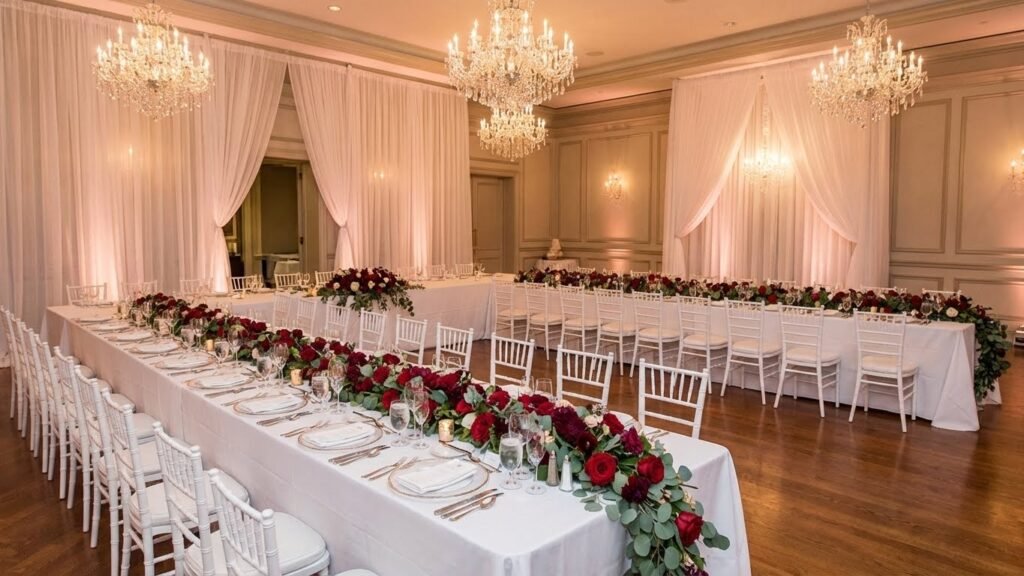
The U-shape positions tables in three connected sections forming an open “U” with the open end facing a head table, stage, or presentation area. This semi-intimate setup works particularly well for smaller, family-centric Chennai weddings. This is one of the most unique best seating arrangements in the latest trend.
Pros:
- Creates a sense of togetherness with all guests facing inward toward a focal point
- Excellent for speeches, toasts, and interactive ceremonies where everyone should see and hear clearly
- Simplifies server access to all tables from the center opening
- VIP or family head table placement feels naturally elevated
Cons:
- Limited to smaller guest counts, rarely exceeding 80-100 people
- Some corner seats have awkward viewing angles
- Not suitable for dancing or entertainment requiring floor space
- Can feel exclusionary if guest lists include acquaintances rather than close family
Practical Tips for Chennai Implementation:
This layout thrives in boutique halls or private dining spaces within larger venues. For mehendi or sangeet ceremonies at halls near Besant Nagar or ECR, the U-shape encourages participation. Ensure the opening of the “U” is at least 12 feet wide for entertainers or ritual performers to move freely. Position air conditioning controls where they won’t create cold spots on the head table. When implementing the best seating arrangements for intimate gatherings, U-shape offers Chennai couples a balanced blend of formality and warmth. Reserve one side of the U for the bride’s family and the opposite for the groom’s, maintaining traditional separation if desired.
Guest Capacity:
Best for 40-100 guests; one of the best seating arrangements when fostering close-knit celebration dynamics.
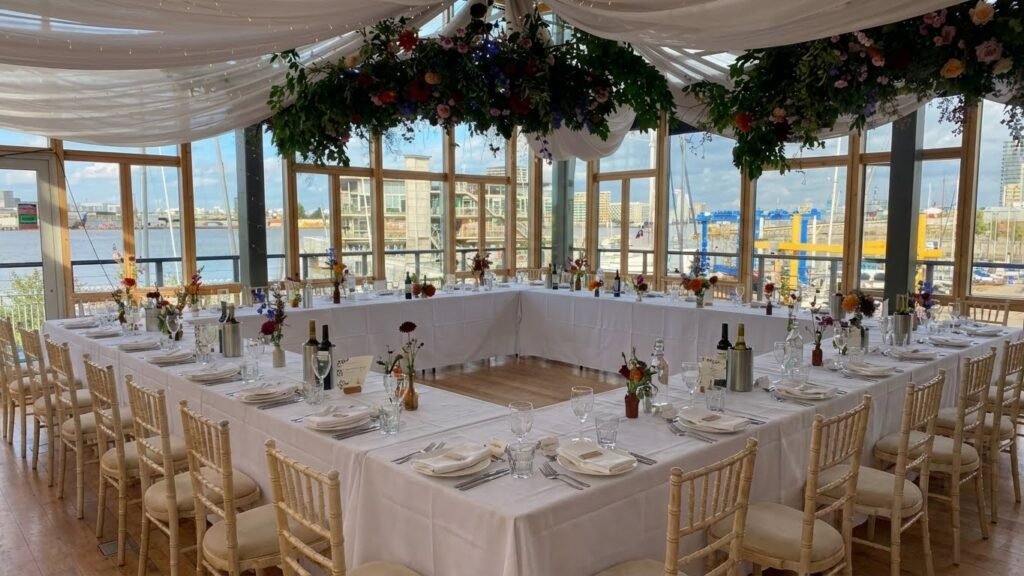
4. Hollow Square
Hollow square creates a continuous square perimeter of tables with an empty center area. Guests sit around the outside edges facing inward, and the central space hosts performances, ceremonies, or remains open for servers. This is the one of the most best seating arrangements loved by many south Indian families.
Pros:
- Democratic layout where no guest is “behind” anyone else
- Center space becomes a natural performance or ritual area
- Encourages conversation across the square, connecting different family sections
- Works well for events blending multiple cultural traditions
Cons:
- Space-intensive, limiting guest capacity significantly
- Guests on opposite sides may feel distant from each other
- Logistical challenges for serving food efficiently from outside the square
- Not ideal for halls with fixed stage positions
Practical Tips for Chennai Implementation:
Hollow square excels in halls with central focal points rather than stage-heavy setups. If your venue in areas like Velachery or Porur has a central chandelier or architectural feature, build the square around it. Keep the interior space at least 16 feet wide to accommodate traditional performances like Bharatanatyam or live musicians. The best seating arrangements using hollow square in Chennai often incorporate floral borders along the table edges facing inward, creating a frame for central activities. Coordinate with caterers early, as this layout requires different service approaches—consider buffet service rather than plated courses to simplify logistics.
Guest Capacity:
Accommodates 50-120 guests comfortably; the best seating arrangements for culturally rich, participatory ceremonies.
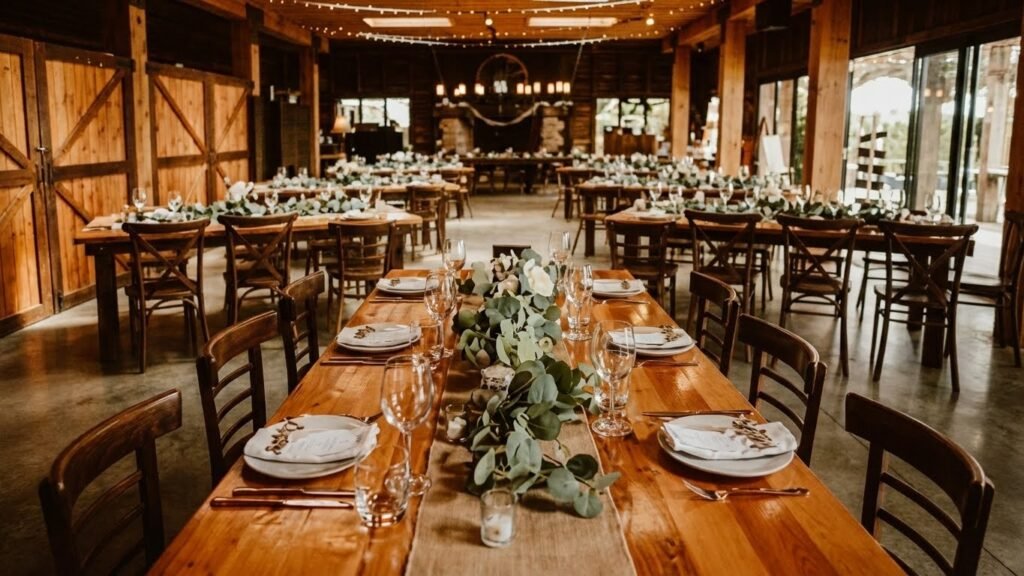
5. Herringbone Style
Herringbone arranges rows at 45-degree angles toward the center aisle or stage, creating a chevron pattern. This modified theater style dramatically improves sightlines while maintaining high capacity. This is one of the most traditional best seating arrangements in chennai.
Pros:
- Superior viewing angles compared to straight rows, especially for mandap ceremonies
- Maintains high guest capacity similar to theater style
- Creates visual interest and aesthetic appeal in venue photography
- Reduces “blind spots” caused by guests in front rows
Cons:
- Requires more floor space width-wise than standard theater rows
- Setup takes longer and demands experienced decorators
- Can be confusing for guests finding assigned seats
- Less effective in narrow, rectangular halls
Practical Tips for Chennai Implementation:
Herringbone shines in square or slightly rectangular halls—many modern Chennai venues in Guindy and Saidapet offer these proportions. Angle rows at precisely 45 degrees from the center aisle; steeper or shallower angles diminish the sightline benefits. Create the center aisle at 5-6 feet wide for comfortable processions. The best seating arrangements for large Chennai weddings often feature herringbone during ceremonies, then transition to rounds for reception. Use aisle markers (floral arrangements, lanterns) to clearly delineate the angled rows. For halls with side entrances, position the pattern so late arrivals can slip in without crossing camera angles during key ritual moments.
Guest Capacity:
Handles 150-600 guests efficiently; among the best seating arrangements when ceremonial visibility is non-negotiable.
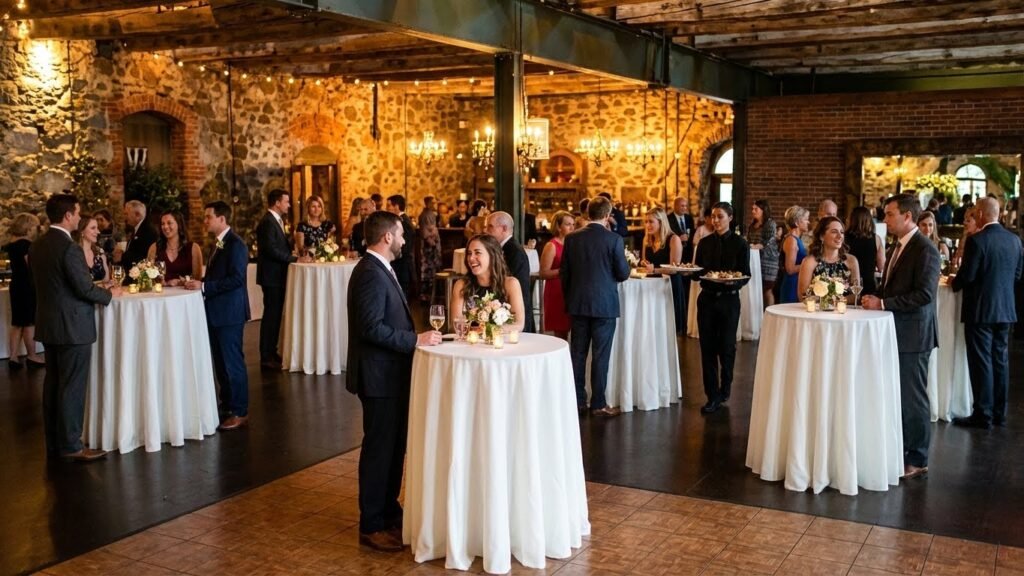
6. Cocktail/Standing Clusters
This contemporary layout features high cocktail tables (42 inches tall) scattered throughout the space with no formal seating or minimal bar stools. It encourages movement, mingling, and a relaxed party atmosphere. This is one of the modern best seating arrangements in chennai.
Pros:
- Maximizes networking and social interaction among diverse guest groups
- Requires less formal space planning, adaptable to irregular hall shapes
- Modern, cosmopolitan vibe appealing to younger Chennai couples
- Lower furniture costs compared to full banquet setups
- Easy access to buffets, bars, and entertainment areas
Cons:
- Not comfortable for elderly guests or those with mobility concerns
- Incompatible with full sit-down meals
- Can feel too casual for traditional family expectations in Chennai
- Limited surface space for guests to place belongings
Practical Tips for Chennai Implementation:
Cocktail style works brilliantly for sangeet nights or pre-wedding mixer events at trendy venues in Nungambakkam or Adyar. Provide at least 30% seating options (lounge furniture, bar stools) for guests who need rest—Chennai’s heat and extended events make this essential. Position cocktail clusters away from buffet lines to prevent congestion. The best seating arrangements for modern Chennai receptions sometimes blend cocktail areas with traditional seating zones, creating distinct party atmospheres within one hall. Ensure adequate standing room: allocate 10-12 square feet per standing guest for comfortable circulation. Choose tables with sturdy bases suited to Chennai’s sometimes uneven flooring in older heritage venues.
Guest Capacity:
Works for 80-400 guests; the best seating arrangements when prioritizing energy and movement.
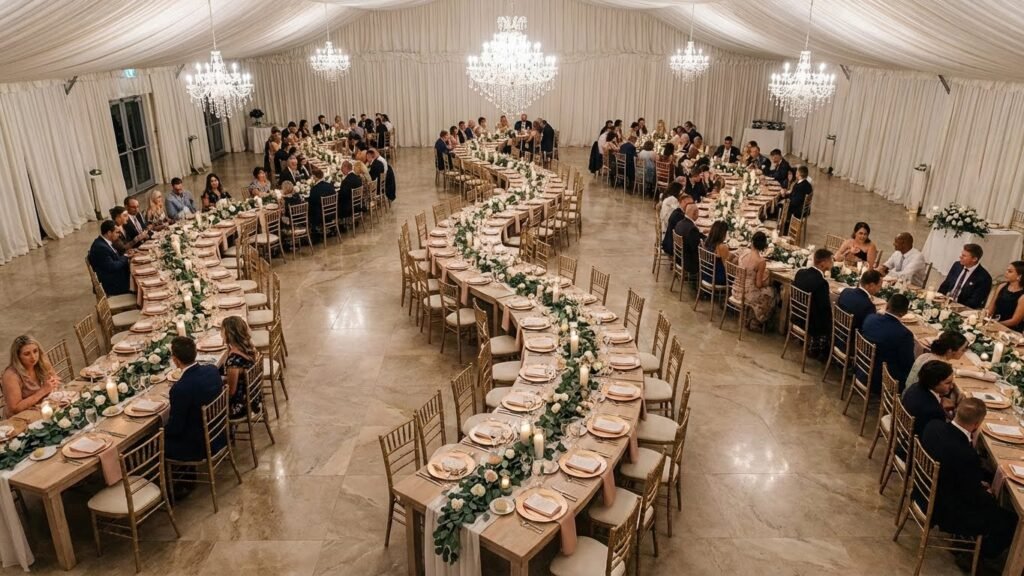
7. Serpentine Layout
Serpentine features long tables arranged in gentle S-curves or flowing wavelike patterns across the hall. This artistic layout breaks the rigidity of straight lines while maintaining dining functionality. This is the best celebrity style best seating arrangements in Chennai.
Pros:
- Visually stunning from above, perfect for drone photography and dramatic entrance reveals
- Creates intimate conversation pockets along each curve
- Softens the formality of traditional layouts
- Guides natural traffic flow along the curves
Cons:
- Extremely space-intensive, reducing total guest capacity
- Difficult to execute in smaller halls or those with many pillars
- Some seats inevitably have poor sightlines to stage areas
- Requires skilled decorators familiar with unconventional layouts
Practical Tips for Chennai Implementation:
Serpentine demands spacious halls—target venues offering at least 5,000 square feet. Halls in sprawling locations like Mahabalipuram or along OMR suit this layout best. Each serpentine table section should seat 10-15 guests maximum before curving; longer sections lose the flowing effect. The best seating arrangements using serpentine in Chennai incorporate overhead elements (draped fabric, hanging florals) that emphasize the curved lines from guest perspectives. Work with decorators experienced in this style—improper curve execution makes seating feel random rather than intentional. Mark curves clearly on your venue floor plan before setup day; misalignment creates awkward gaps. This layout excels for garden-style indoor halls with high ceilings and natural light.
Guest Capacity:
Best for 100-250 guests; the best seating arrangements when aesthetics drive your planning priorities.
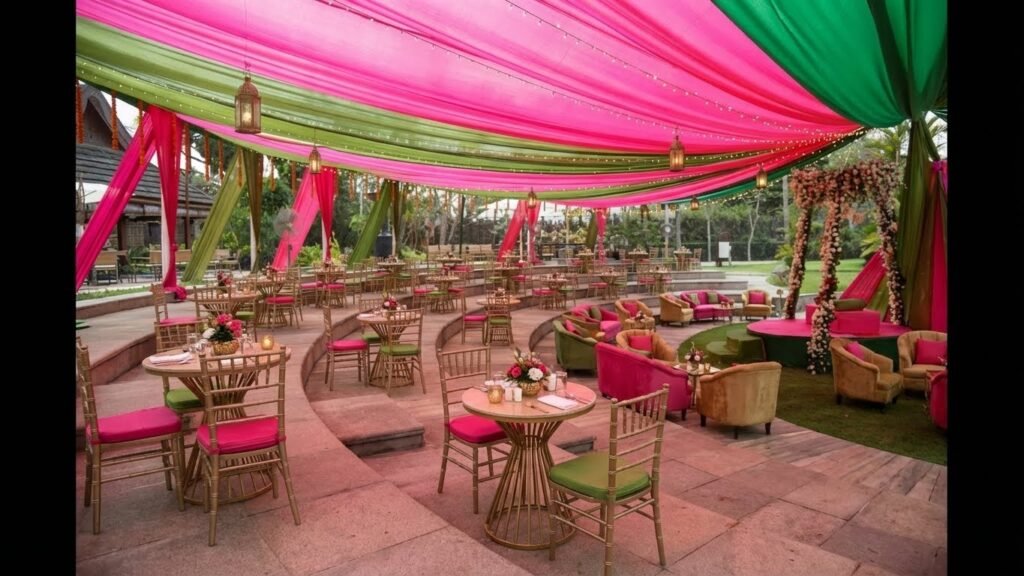
8. Mixed Cabaret
Mixed cabaret combines various table shapes and sizes—rounds, rectangles, and even squares—strategically placed throughout the venue. This flexible approach accommodates different group dynamics within a single event. This is mix up of traditional and modern best seating arrangements in chennai.
Pros:
- Adapts to any hall shape or size, working around architectural features
- Groups families, friends, and colleagues according to relationship dynamics
- Visually interesting, avoiding monotonous table repetition
- Optimizes space utilization in halls with irregular dimensions
Cons:
- Requires detailed planning and clear assignment cards to avoid confusion
- Can appear chaotic if not executed with cohesive décor
- Challenging to maintain consistent centerpiece heights and styles
- Service staff need clear guidance on table numbering systems
Practical Tips for Chennai Implementation:
Use round tables (8-10 guests) for family groups, rectangular tables (6-8 guests) for friend circles, and smaller square tables (4 guests) for couples. This matching of furniture to relationship type enhances comfort. The best seating arrangements for Chennai’s typically diverse guest lists often feature mixed cabaret, acknowledging that not all groups interact the same way. Place larger rounds nearest the dance floor or entertainment areas; position rectangular tables along walls or in corners where their linear shape fits naturally. Ensure consistent table heights if mixing cocktail and standard dining tables—45-degree height differences create service complications. Color-code table linens subtly (same shade family, different textures) to unify the mixed look.
Guest Capacity:
Accommodates 80-400 guests flexibly; among the best seating arrangements for weddings with varied guest demographics.
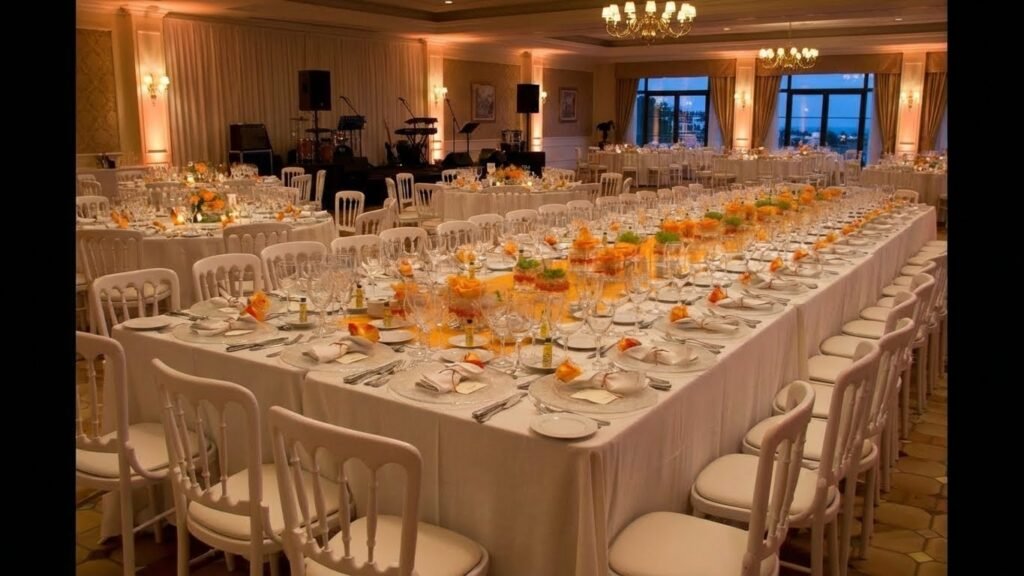
9. Imperial/Long Tables
Imperial style arranges elongated banquet tables in parallel rows, reminiscent of medieval feasting halls. Tables typically seat 20-40 guests along both sides, creating a grand, communal dining experience. This is royal king style best seating arrangements in Chennai.
Pros:
- Creates dramatic visual impact, especially in high-ceilinged heritage venues
- Encourages conversation along table lengths, mixing guests who might not otherwise interact
- Simplifies décor—one continuous centerpiece runner per table
- Efficient server access to many guests per trip
Cons:
- Difficult for guests to converse with those across the table width
- Some seats have limited or obstructed stage views
- Requires substantial hall length, not suitable for square-proportioned rooms
- End seats can feel isolated from the main group
Practical Tips for Chennai Implementation:
Imperial tables excel in heritage properties and restored mansion venues around Mylapore or Royapettah. Use 8-foot table sections linked seamlessly with matching linens. Space parallel tables 6-7 feet apart minimum—Chennai’s typical plated service requires this clearance. Position tables perpendicular to the stage for better viewing angles across rows. The best seating arrangements incorporating imperial style in Chennai often reserve one head table in cross-table orientation for the couple and immediate family. Accent with elevated centerpieces every 12 feet along the runner to prevent visual monotony. For air-conditioned halls, ensure cooling ducts aren’t directly above table centers where they’ll disturb candles or hanging décor elements.
Guest Capacity:
Suits 100-350 guests; the best seating arrangements for creating grand, formal reception atmospheres.
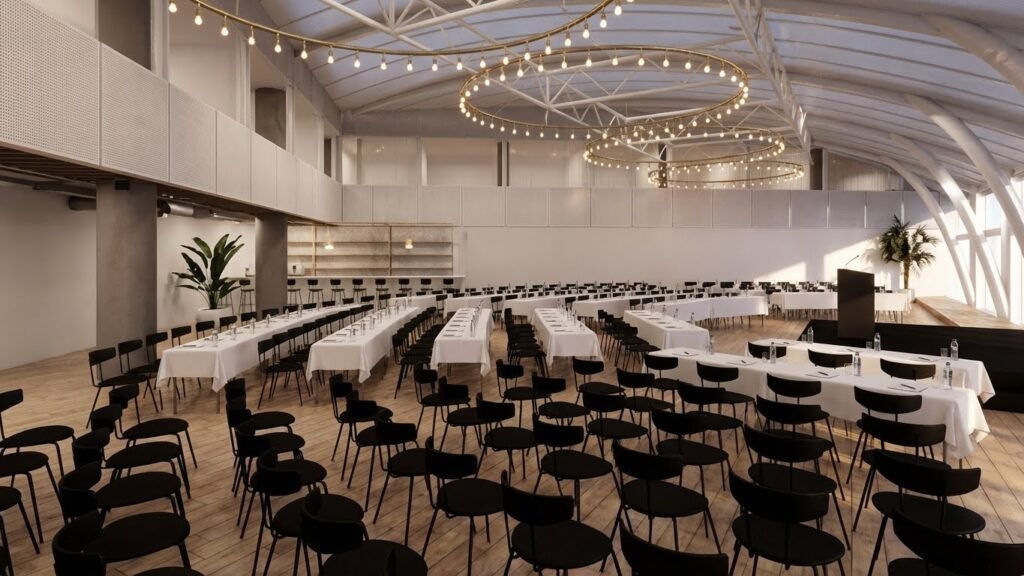
10. Classroom Configuration
Classroom style features rows of rectangular tables with chairs arranged on one side only (facing forward), leaving the opposite side open. This semi-formal setup balances surface area needs with forward-facing attention. This is a simple and space efficient best seating arrangements.
Pros:
- Provides writing/dining surfaces while maintaining ceremony focus
- Works well for events with program booklets, meal courses, or interactive elements
- More space-efficient than full banquet rounds
- Clear pathways between rows for service and guest movement
Cons:
- Less social than round tables—guests primarily interact with immediate neighbors
- Back rows may feel disconnected from stage activities
- Appearance can seem too corporate or workshop-like for weddings
- Requires more tables than theater style, increasing costs
Practical Tips for Chennai Implementation:
This layout suits wedding workshops, mehendi planning sessions, or daytime ceremonies at halls doubling as conference spaces in areas like Perungudi or Sholinganallur. Use 6-foot or 8-foot tables, seating three guests per table comfortably. Stagger rows slightly (offset the pattern) so guests have sightlines between heads in front rows. The best seating arrangements using classroom configuration in Chennai often appear in morning ceremonies followed by lunch service, where tables immediately convert to dining use. Decorate table fronts (the side facing the aisle) with floral swags since backs remain visible. Ensure tables are sturdy enough for guests to lean on—some rental tables wobble, particularly problematic during long ceremonies.
Guest Capacity:
Handles 80-300 guests; the best seating arrangements when ceremonies blend formal viewing with active participation.
Comparison Table: Chennai Wedding Hall Best Seating Arrangements
| Seating Style | Typical Capacity | Best For | Pros | Cons | Ease of Setup (1–5) |
|---|---|---|---|---|---|
| Theater Style | 200–800 | Ceremonies, religious rituals | High capacity, clear sightlines, cost-effective | No dining surface, limited interaction | 5 |
| Banquet Rounds | 100–500 | Dinner receptions, mixed events | Social interaction, dining surface, flexible | Lower capacity, higher cost | 4 |
| U-Shape | 40–100 | Intimate gatherings, family events | Togetherness feel, speech-friendly, inclusive | Limited capacity, some awkward angles | 3 |
| Hollow Square | 50–120 | Cultural ceremonies, participatory events | Democratic seating, central performance space | Space-intensive, service challenges | 3 |
| Herringbone | 150–600 | Large ceremonies, mandap viewings | Excellent sightlines, high capacity, visual appeal | Width-intensive, complex setup | 2 |
| Cocktail Clusters | 80–400 | Sangeet, mixers, modern receptions | Social mingling, adaptable, contemporary | Uncomfortable for elderly, no formal dining | 4 |
| Serpentine | 100–250 | Luxury receptions, photography focus | Stunning aesthetics, intimate curves | Very space-intensive, complex execution | 1 |
| Mixed Cabaret | 80–400 | Diverse guest lists, flexible needs | Adapts to any space, accommodates groups | Requires detailed planning, potential chaos | 3 |
| Imperial / Long Tables | 100–350 | Formal dinners, heritage venues | Grand atmosphere, dramatic impact | Limited cross-table interaction | 3 |
| Classroom | 80–300 | Interactive ceremonies, workshop elements | Surface space, forward focus, efficient | Less social, corporate feel | 4 |
This comparison helps Chennai couples identify which of the best seating arrangements aligns with their priorities—whether capacity, atmosphere, budget, or guest experience drives decisions.
Local Considerations for Chennai Wedding Halls
Chennai’s unique context shapes how seating arrangements succeed or fail. Traffic patterns around popular wedding corridors like the GST Road, Mount Road, and Anna Salai mean guests arrive in waves rather than uniformly. The best seating arrangements account for staggered arrivals by positioning late-seating areas near entrances with minimal disruption to ongoing ceremonies. Halls in high-traffic zones should designate clear parking coordinators and communicate early arrival incentives—parking scarcity near T. Nagar and Mylapore venues makes timing critical.
Climate considerations dominate layout planning. Chennai’s monsoon season (October-December) coincides with peak wedding months, requiring contingency plans for outdoor-adjacent seating. Even indoor halls experience humidity challenges; avoid fabric-heavy décor on chairs near doors where moisture accumulates. Air conditioning capacity varies widely across Chennai venues—older heritage halls in Triplicane or San Thome often have limited cooling. Place elderly guests and children in zones with optimal AC coverage; use your venue walk-through to map cool spots versus warmer areas near kitchens or stage lighting.
Vendor coordination in Chennai requires cultural awareness and relationship management. Decorators, caterers, and rental companies often operate within family networks, and miscommunication ripples quickly. When selecting from the best seating arrangements, confirm your decorator has executed that specific layout previously—Chennai’s vendor community values demonstrated experience over theoretical capability. Schedule setup during cooler morning hours (6-10 AM) to protect workers and ensure quality work; midday heat degrades focus and increases errors.
Chennai’s guest demographics typically include multi-generational families, international relatives accustomed to different seating norms, and local community members who expect traditional hospitality standards. The best seating arrangements create zones accommodating these varied needs: formal front sections for elders, flexible standing areas for younger guests, and clearly marked family sections respecting customary separation during certain ceremonies. Language diversity (Tamil, Telugu, Hindi, English) necessitates visual seating markers beyond written signs—color-coding, floral variations, or decorative elements work better than text-heavy directions.
Transportation logistics affect guest experience more than couples often anticipate. Halls along busy corridors may have limited nearby hotels, meaning guests travel 30-45 minutes through Chennai traffic. Consider this fatigue when choosing seating styles—standing cocktail arrangements become exhausting after long commutes, while comfortable banquet rounds feel welcoming. Coordinate with your venue on guest drop-off zones; some halls in congested areas like Pondy Bazaar require guests to walk 5-10 minutes from parking—ensure elderly guests and those in traditional attire can navigate safely.
Case Study: Raj Wedding Hall Successful Seating Implementation
The Arjun-Priya wedding at Raj wedding hall in October 2024 showcased how strategic seating choices transform guest experience. This couple faced a common Chennai challenge: hosting 350 guests in a hall with moderate square footage and a central pillar that previous couples had struggled to incorporate aesthetically.
After consulting with their event planner, they selected a mixed cabaret layout—one of the best seating arrangements for navigating architectural constraints. The decorator positioned six large round tables (seating 10 each) in the open floor areas, eight rectangular tables (seating 8 each) along the perimeter walls, and four small square tables (seating 4 each) near the entrance for late arrivals or children’s groups. The central pillar became an asset, wrapped in cascading jasmine and serving as a natural divider between the bride’s and groom’s family sections.
Measurable outcomes demonstrated the layout’s effectiveness. Post-event surveys (distributed via WhatsApp to 200 guests) revealed 92% rated the seating as “comfortable” or “very comfortable”—significantly above the typical 70-75% satisfaction for Chennai wedding seating. Photographer feedback confirmed the mixed table sizes created depth and visual interest in wide shots while allowing intimate portrait opportunities at smaller tables. The caterers reported 30% faster service times compared to their previous event at the same venue, attributing this to the strategic table placement that eliminated service bottlenecks around the problematic pillar.
The couple invested ₹45,000 in rental furniture (₹800 per round table, ₹600 per rectangular table, ₹400 per square table) and ₹28,000 in linens and centerpieces. Decorator setup time totaled 6 hours with a 5-person team—manageable within the hall’s allotted preparation window. Guest flow during the reception remained smooth, with no crowding at entry/exit points despite the varied table arrangement. The bride’s grandmother, initially concerned about navigating an unconventional layout, specifically praised the clear pathways and accessible seating near her preferred cool zone under a ceiling fan.
This Raj wedding hall experience reinforced that among the best seating arrangements, success depends less on following trends and more on adapting proven layouts to specific venue characteristics and guest needs.
Budget & Logistics Checklist for Chennai Seating Implementation
Furniture & Rental Costs (Estimated Chennai Market Rates):
- Standard banquet chairs: ₹150-₹300 per chair
- Round tables (60-inch): ₹800-₹1,200 each
- Rectangular tables (6-8 ft): ₹600-₹1,000 each
- Cocktail high tables: ₹500-₹800 each
- Table linens: ₹200-₹500 per table depending on fabric
- Chair covers/sashes: ₹50-₹150 per chair
- Centerpiece rentals: ₹800-₹3,000 per table
Setup & Logistics:
- Professional decorator team (4-6 people, 4-8 hours): ₹15,000-₹35,000
- Floor plan design consultation: ₹5,000-₹12,000
- Additional labor for complex layouts (herringbone, serpentine): ₹8,000-₹15,000
- Lighting for ambiance (uplighting, pinspots): ₹12,000-₹40,000
- Signage and seating cards: ₹3,000-₹8,000
Timeline for Implementation:
- 8-12 weeks before: Finalize guest count and choose from the best seating arrangements based on venue walk-through
- 6-8 weeks before: Book rental furniture and confirm decorator availability
- 4-6 weeks before: Create detailed floor plan with table numbers and family section assignments
- 2-4 weeks before: Order/design signage, place cards, and table numbers; confirm setup timeline with venue
- 1 week before: Final guest count adjustments; communicate dietary needs and seating preferences to caterers
- Setup day (typically 6-12 hours before event): Decorator team executes layout; couple reviews and approves final arrangement
- Day of event: Venue coordinator manages last-minute adjustments and guides guests to assigned sections
Checklist Items:
- Confirm venue load-in access times and any restrictions on setup hours
- Verify furniture dimensions fit through hall doorways (important for heritage Chennai venues with narrow entries)
- Arrange parking for decorator team vehicles during setup
- Designate a point person (not bride/groom) to make day-of seating decisions
- Prepare backup seating (5-10% extra chairs) for unexpected plus-ones common in Chennai weddings
- Schedule decorator teardown and ensure rental company pickup times align with venue checkout
- Document final layout with photos for future reference and vendor portfolios
Understanding these costs and timelines helps Chennai couples realistically budget for implementing their chosen seating arrangements without last-minute financial surprises.
Frequently Asked Questions
Q: What is the most popular best seating arrangements for Chennai wedding receptions?
A: Banquet rounds dominate Chennai receptions because they balance dining functionality with social interaction. Most couples choose this from among the best seating arrangements when hosting traditional sit-down dinners with 150-400 guests.
Q: How do I handle VIP seating for elders in traditional South Indian ceremonies?
A: Designate front-center sections in theater or herringbone layouts, using elevated platforms (4-6 inches) for better viewing if hall design permits. Ensure VIP areas have optimal air conditioning and proximity to restrooms—practical comfort matters as much as positioning.
Q: Can I mix multiple seating styles in one event?
A: Absolutely. Many Chennai couples use theater style for ceremonies, then transition to banquet rounds for reception dining. The key is planning the changeover logistics—either schedule a gap between segments or designate a fast-setup crew to reconfigure while guests relocate to cocktail areas.
Q: What best seating arrangements works best for halls with low ceilings or pillars?
A: Mixed cabaret and banquet rounds adapt well to challenging architecture. Use pillars as natural dividers between family sections and keep centerpieces low-profile (under 14 inches) in venues with ceiling heights below 10 feet.
Q: How much space per guest should I plan for comfortable seating?
A: Allocate 10-12 square feet per seated guest for banquet layouts, 8-10 square feet for theater style, and 12-15 square feet for cocktail/standing arrangements. Chennai’s climate makes breathing room essential—crowded layouts feel oppressive when temperatures rise.
Q: Do Chennai wedding halls charge extra for unconventional best seating arrangements layouts?
A: Most halls don’t charge for layout choice, but complex arrangements (serpentine, herringbone) incur higher decorator fees and potentially longer setup times, which may trigger overtime venue charges. Clarify these terms in your venue contract.
Q: How far in advance should I finalize my best seating arrangements choice?
A: Lock in your layout choice 8-10 weeks before the event to secure furniture rentals during peak Chennai wedding season (November-February). Last-minute changes become expensive as rental inventory depletes.
Q: What’s the best backup plan for outdoor best seating arrangements if monsoon rains hit?
A: Always contract with venues offering covered outdoor spaces or adjacent indoor halls. The best seating arrangements for Chennai’s unpredictable weather include flexible options—cocktail clusters, for instance, move indoors more easily than fixed banquet rounds.
Conclusion & Call to Action
Selecting from the best seating arrangements for your Chennai wedding hall transforms a logistical necessity into a strategic advantage. Whether you prioritize guest capacity, ceremonial sightlines, dining comfort, or aesthetic impact, the right layout amplifies every element of your celebration. Chennai’s unique blend of tradition, climate considerations, and diverse guest expectations makes this decision more nuanced than simply choosing the most attractive option—it requires understanding how each arrangement performs under local conditions.
The ten layouts explored in this guide offer proven solutions for venues across Chennai, from intimate heritage properties to expansive modern halls. By considering factors like your guest count, ceremony type, budget constraints, and venue architecture, you’ll identify which arrangement best serves your vision. Remember that the most successful Chennai weddings often adapt standard layouts to their specific context rather than rigidly following trends.
Ready to see these seating arrangements in action? Visit Raj wedding hall to tour our versatile spaces and discuss how our experienced team can help you implement any of these layouts. Our venue coordinators have executed hundreds of Chennai weddings and understand the practical details that make seating plans succeed. Schedule your consultation today—call us at [contact number] or book a tour online. Let us show you how the right seating choice elevates your entire wedding experience from good to unforgettable.
Your Chennai wedding deserves best seating arrangements that honors tradition while embracing your unique style. Start planning your perfect layout today.
we can help you to choose the right seating arrangement for that you can contact us
click the icon for Linkedin profile